
Moroccan Rug Size Guide: The Right Rug for Every Room
The single most common rug mistake is going too small. A rug that floats in the middle of a room shrinks the whole space; a rug that generously catches the front legs of your sofa and chairs pulls the room together and makes it feel larger, calmer and more expensive. This guide gives concrete size recommendations for every room a handwoven Moroccan rug tends to end up in: living rooms with sectional or two-sofa layouts, dining rooms sized around the table (with room to pull chairs back), king and queen bedrooms, entryways and long hallways where a runner is the right answer. Includes a foot-to-metre converter so you can order with confidence.
The single most common rug mistake is going too small. A rug that floats in the middle of a room shrinks the whole space. A rug that generously catches the front legs of your sofa and chairs pulls the room together and makes it feel larger, calmer, and more expensive than it is. We have made this mistake ourselves. Do not repeat it.
Living room
The rule we use: all the front legs of the sofa and the accent chairs should sit on the rug. That is what turns a scatter of furniture into a single group. In practice that means a rug at least as wide as the sofa plus a comfortable margin either side. For a standard three-seater, that is usually 8 by 10 feet at a minimum, and 9 by 12 in a larger room. For a sectional, 10 by 14 is often the honest answer. If you are between two sizes, go up.
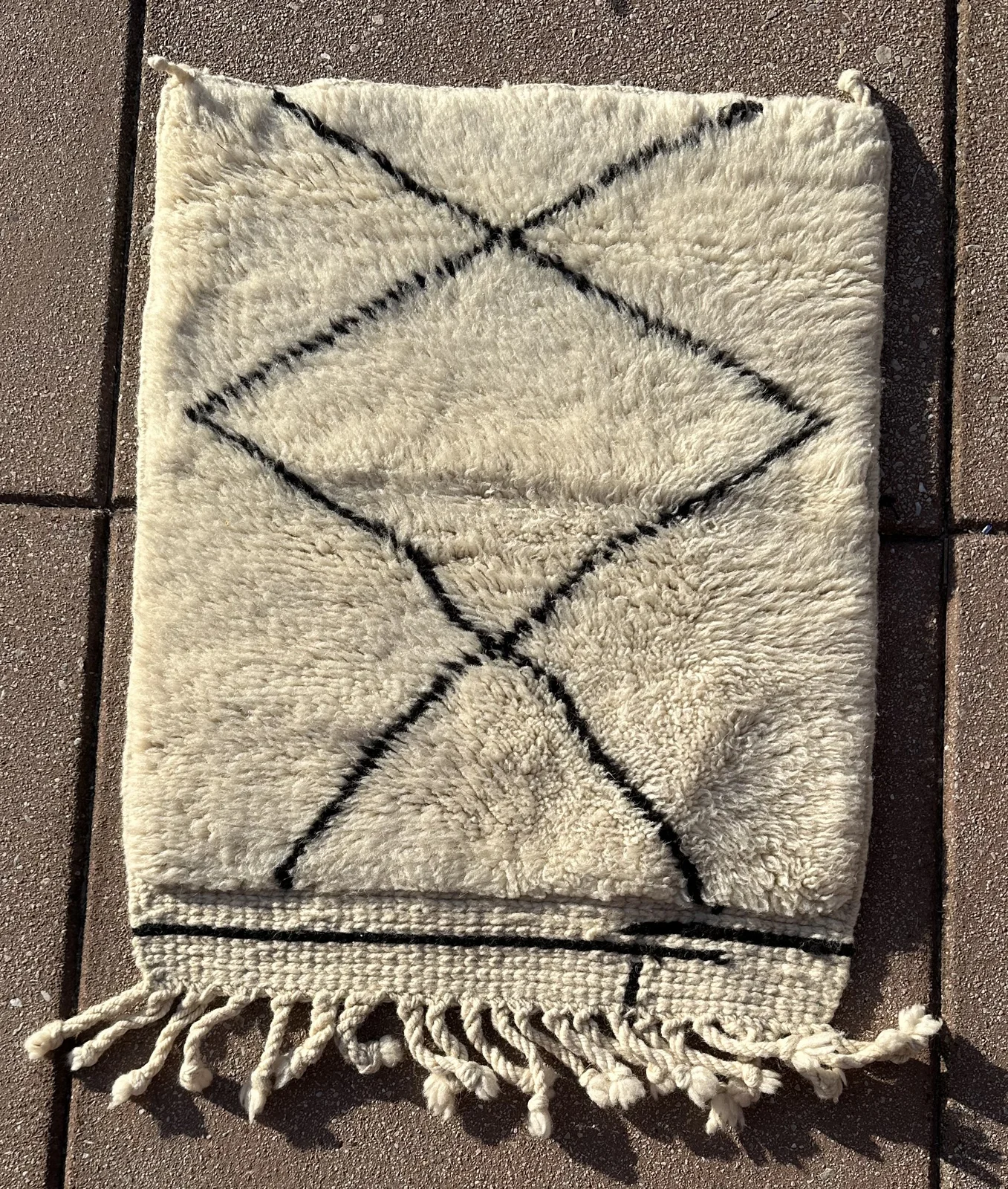
Dining room
Size the rug so that when a chair is pulled back to sit down, it stays on the rug. Add at least 24 inches (60 cm) to every side of the table. For a six-seat dining table, that usually lands around 8 by 10; for eight seats, 9 by 12. Round rugs work under round tables; go larger than you think.
Bedroom
Two options both work. Either a large rug under the bed with 18 to 24 inches of rug showing on the three walkable sides (typically 9 by 12 under a king, 8 by 10 under a queen), or a runner on each side of the bed, wide enough to catch bare feet the moment you get up. Avoid the small rug at the foot of the bed. It always looks like an afterthought.
Entryway and hallway
In an entryway, a small 3 by 5 or 4 by 6 is usually right, sized to sit inside the door swing. For a hallway, a runner should stop 6 to 12 inches short of both ends of the hall rather than running out completely; the visible floor on each side is part of the composition.
Feet to metres, at a glance
Rough conversions we use daily: 6 by 9 ft is about 180 by 275 cm; 8 by 10 ft is about 245 by 305 cm; 9 by 12 ft is about 275 by 365 cm; 10 by 14 ft is about 305 by 425 cm. When in doubt, measure the actual footprint of the rug on your floor with tape before you order.
When no standard size works
If your room falls between sizes, if a wall is short, if a piano eats the corner, do not compromise. Our custom program makes a rug in the exact dimensions and palette you need, with the same Mrirt-density hand as Diamond Heritage. It takes sixteen to twenty-two weeks, so plan accordingly, but you will not be looking at a rug that is almost right for the next twenty years. The full collection is a good place to see the shapes and palettes we currently work in.