
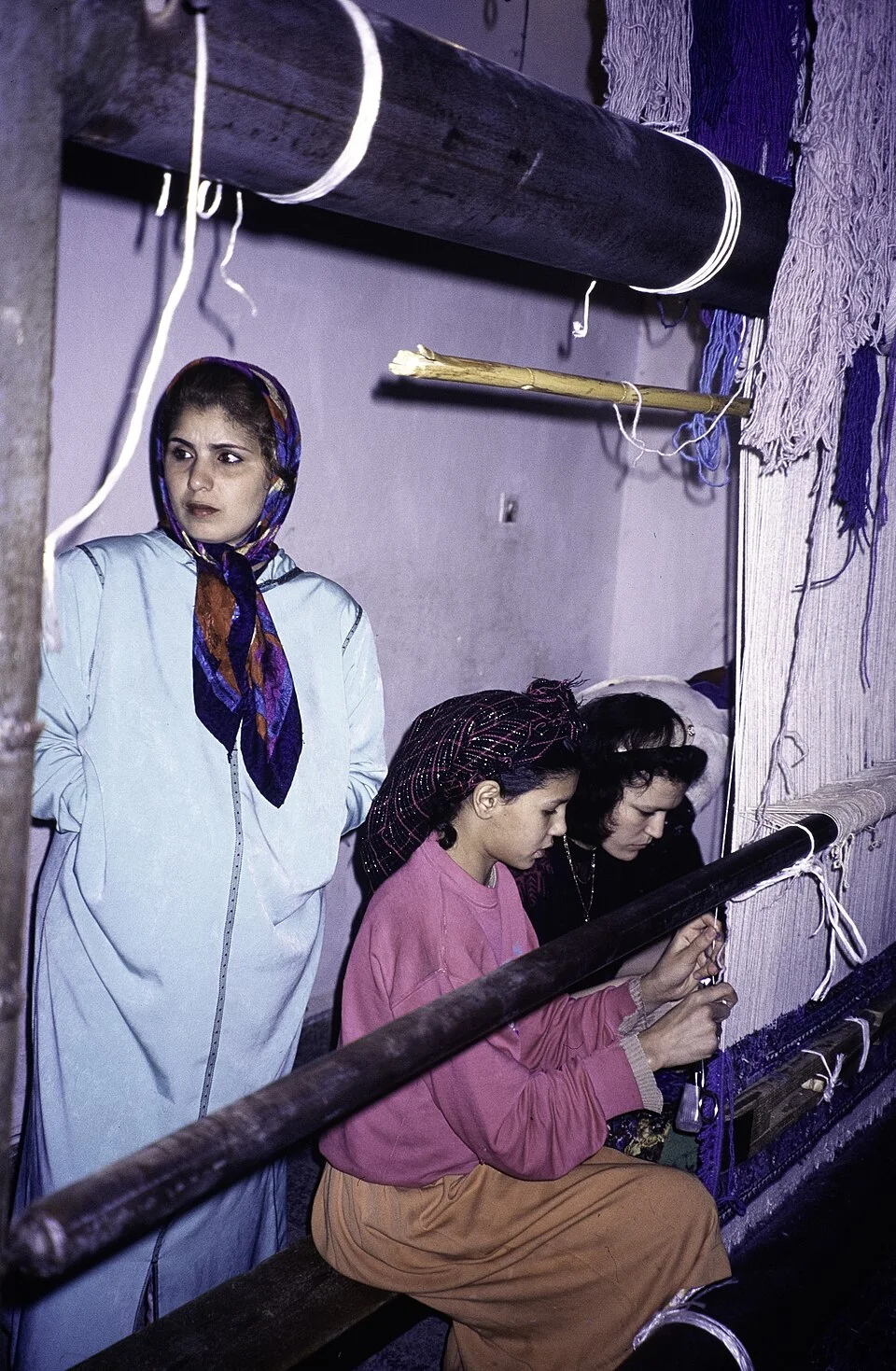
How a Moroccan Rug Is Made: From Fleece to Floor
A handwoven Moroccan rug is the end of a long, patient chain that begins on a hillside in the Middle Atlas and ends under your bare feet. This guide walks the whole journey: shearing sheep raised at altitude for their dense fleece, sorting and washing the wool in cold spring water, hand-spinning it into thread, dyeing it with plants and minerals gathered around Mrirt, warping a wooden loom, and then, slowest of all, tying the rug knot by knot, sometimes for months. We'll show what actually happens at each stage, why each step matters for how the rug feels in ten years, and what separates real handwoven work from the machine-loomed pieces sold under the same name.
A handwoven Moroccan rug is the end of a long, patient chain that begins on a hillside in the Middle Atlas and ends under your bare feet. We have made the trip up that chain many times now, from the pastures above Azrou down to a workshop in Khenifra where a piece was just being cut off the loom. This is what we have seen at each stage, and why each one matters for how the rug feels a decade in.
1. Shearing in the Atlas
It starts with sheep raised at altitude for their dense, springy fleece. The cold winters up here are what give the fibre its bounce. Shearing happens once a year, by hand, and the raw fleece is sorted on the spot. Anything short, coarse, or discoloured is set aside. What we buy is the top of the pile. More on where the wool begins in a longer piece.
2. Sorting and washing in cold spring water
The fleece is washed in the shallow river between Khenifra and Mrirt. The water is cold enough to keep the natural lanolin, which is exactly what a commercial mill would strip out to speed things up. The lanolin is the reason a wool rug still repels a spill ten years later. This stage takes days, not hours.
3. Hand spinning
Washed fleece is combed and hand-spun into yarn. Machine spinning is faster and yields a more uniform thread, which sounds like a virtue and is not. The tiny variations in a hand-spun yarn are what let a woven surface catch light unevenly and feel alive. A machine-spun rug looks flat by comparison, even before it starts wearing out.
4. Natural dyeing
Yarn is dyed with plants and minerals gathered around Mrirt, madder, pomegranate, saffron, indigo, or left the color the sheep grew it. Natural dye refuses to be uniform, and that is the point. One batch reads warmer, the next cooler, and both age gracefully instead of going dull. We keep a stack of dyed color cards in our workshop that we test every new batch against.
5. Design and pattern
We work with the weavers on hand-drawn design cards pinned above the loom, some our own, some passed down. The card is a guide, not a diktat. A weaver still makes hundreds of small decisions a day about tension, spacing, and where a motif starts and stops. That is why no two Azral rugs are identical.
6. Hand knotting
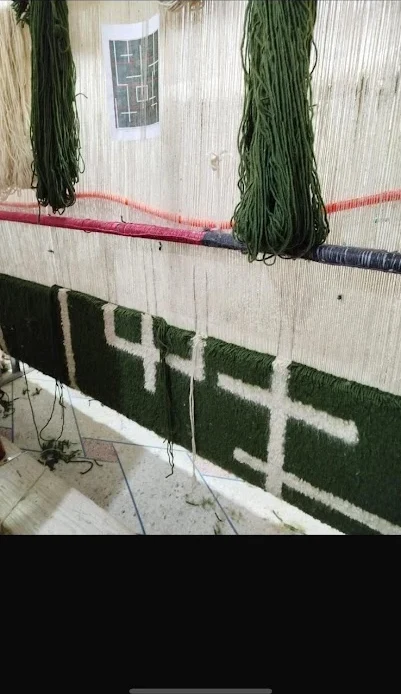
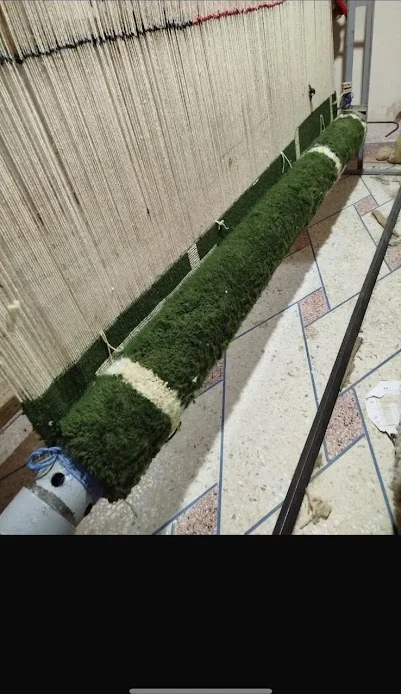
Then, slowest of all, the rug is tied knot by knot on an upright wooden loom. A single piece takes between sixteen and twenty-two weeks. There is no machine version of this that produces the same object. If you can order the same rug in a week from a warehouse, it was made by a loom that beats forty knots a second, not by a woman with a comb.
7. Washing, drying, shearing, finishing
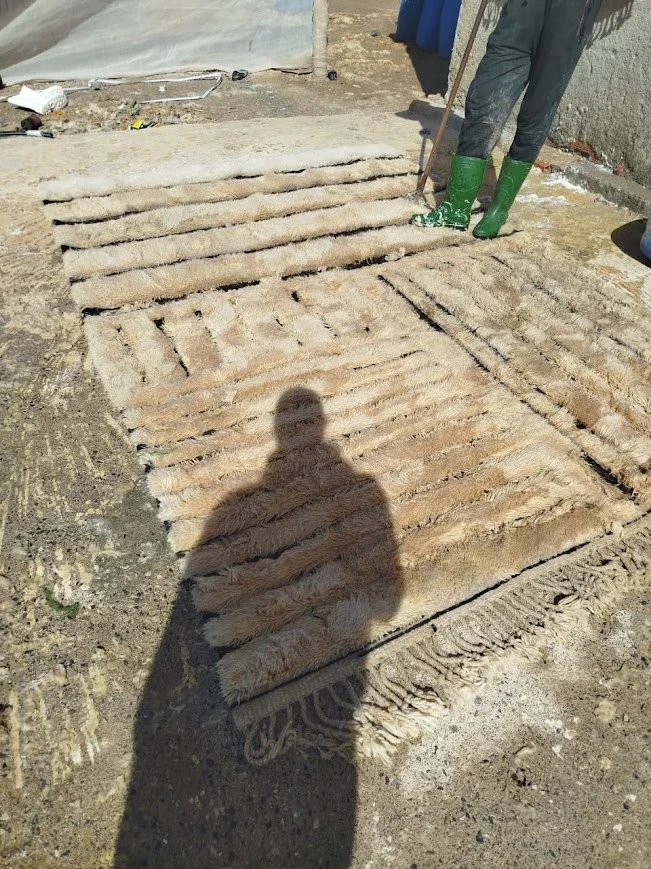
The finished piece is washed again in cold spring water, dried outdoors in mountain air, hand-sheared to even the surface, and inspected. Only then does it leave for us. The whole chain, from fleece to floor, spans months and dozens of hands.
If any of this sounds excessive, it is meant to. It is the reason a piece like Pure Heritage or Brut feels different from a factory rug in the same aesthetic. For the fuller version of this process with more images, our craft page walks step by step; for the finished pieces, the collection.