
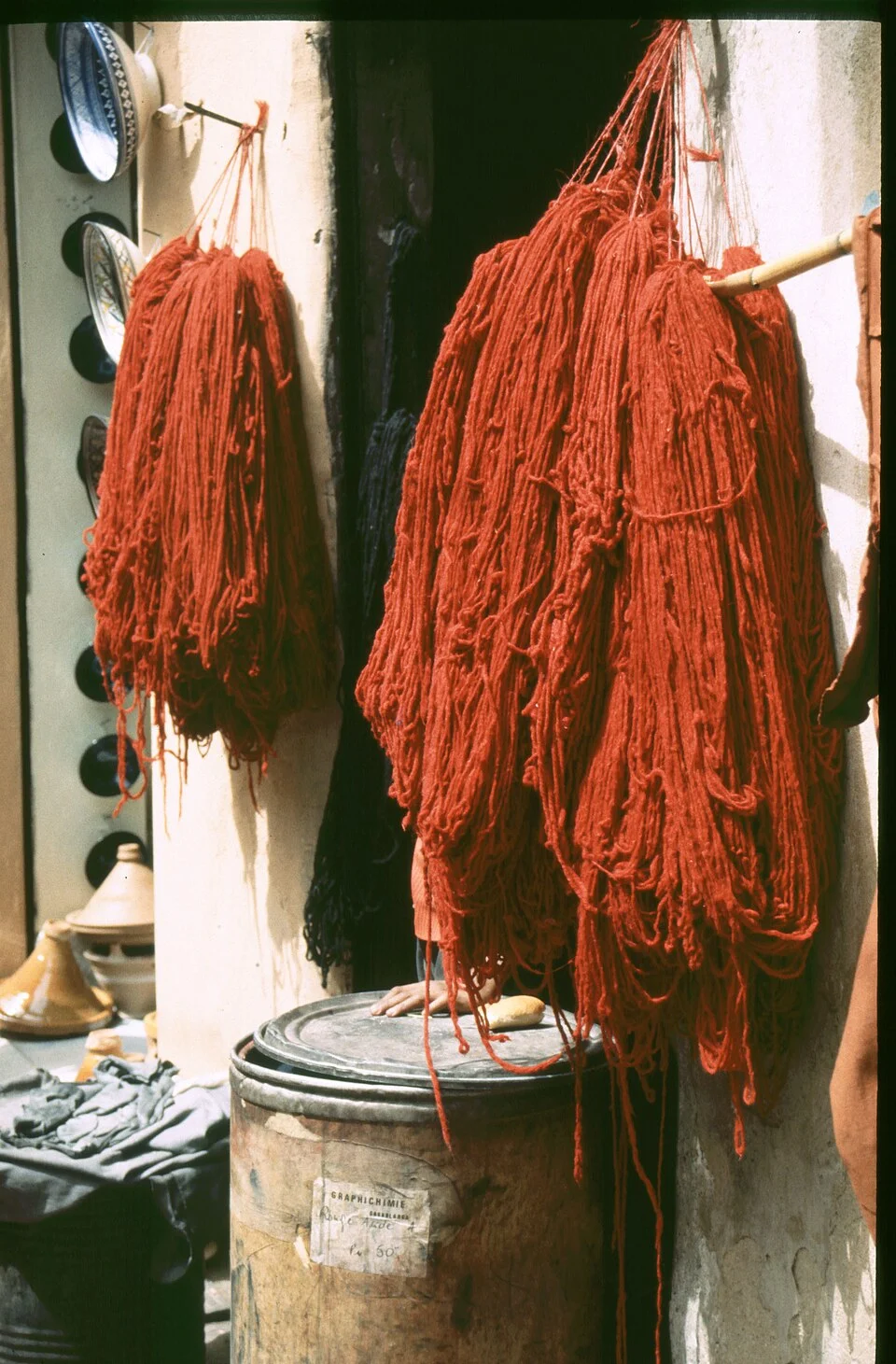
The colors that come from the land
No two natural dye batches are ever quite the same, and that's exactly why we love them.
The palette of an Azral rug does not come from a factory. It comes from the ground, from the plants and minerals of the Middle Atlas, and from the simple discipline of leaving a great deal of wool exactly the colour the sheep grew it. We learned very quickly, once we started sourcing seriously, that natural colour is a much slower and much more honest process than synthetic dye, and that the difference reads in the rug for the rest of its life.
Where our colours come from
Our softest creams and ivories are simply undyed fleece, sorted by hand into bins of ivory, pale grey, chestnut, and near-black. Nothing is added. The deeper tones come from natural sources: madder root for warm reds and terracottas, pomegranate skin and saffron for yellows and warm ochres, walnut hull for the browns, indigo for the blues. Each is simmered slowly in a copper pot and the wool is dipped, lifted, dipped again, an hour at a time, until the colour is where we want it. There are shortcuts to any of this. We have chosen not to use them.
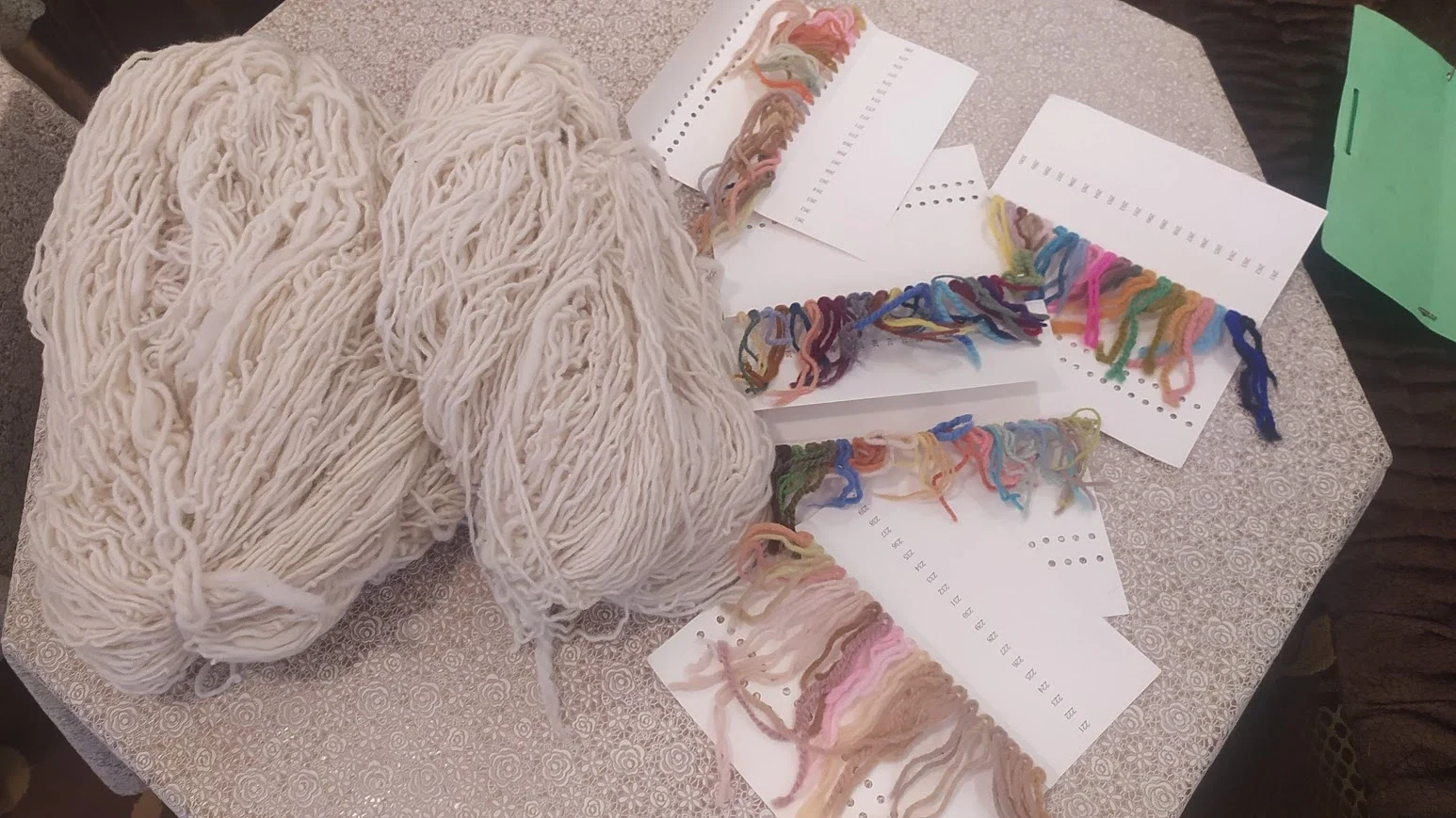
Every dye batch we make is numbered and pinned to the wall. When a new order comes in for a colourway we have made before, we do not guess; we go back to the card and match against it. It is monastic work and it is the only way to keep a natural palette consistent across pieces woven months apart. If you visit our craft page you will see the same discipline applied at every step, from the wool washing on.
Chasing blue in Chefchaouen
Colour scouting is one of the small joys of running this brand. We took a trip last year to Chefchaouen, the blue town north of Fez, partly to see the pigment in real life and partly because a supplier there mixes an indigo we had not been able to match anywhere else. We spent three days walking the same painted alleys at different hours, watching the same wall shift from cobalt in the morning to almost violet at dusk, and came home with two kilos of pigment and a much better sense of what we wanted our own collection to feel like at the deeper end of the palette.
The honesty of a colour that changes
The beauty, and the honesty, of natural dye is that it refuses to be uniform. One batch leans warmer, the next cooler. Over years, the tones soften rather than fade, settling into something even lovelier than the day the rug was made. If you want a colour that will match a paint chip forever, natural dye is not it. If you want a rug that quietly ages alongside your walls and your light, it is the only choice we have found. For the wider picture of how these colours meet the loom, we walk through it end to end in how a Moroccan rug is made.